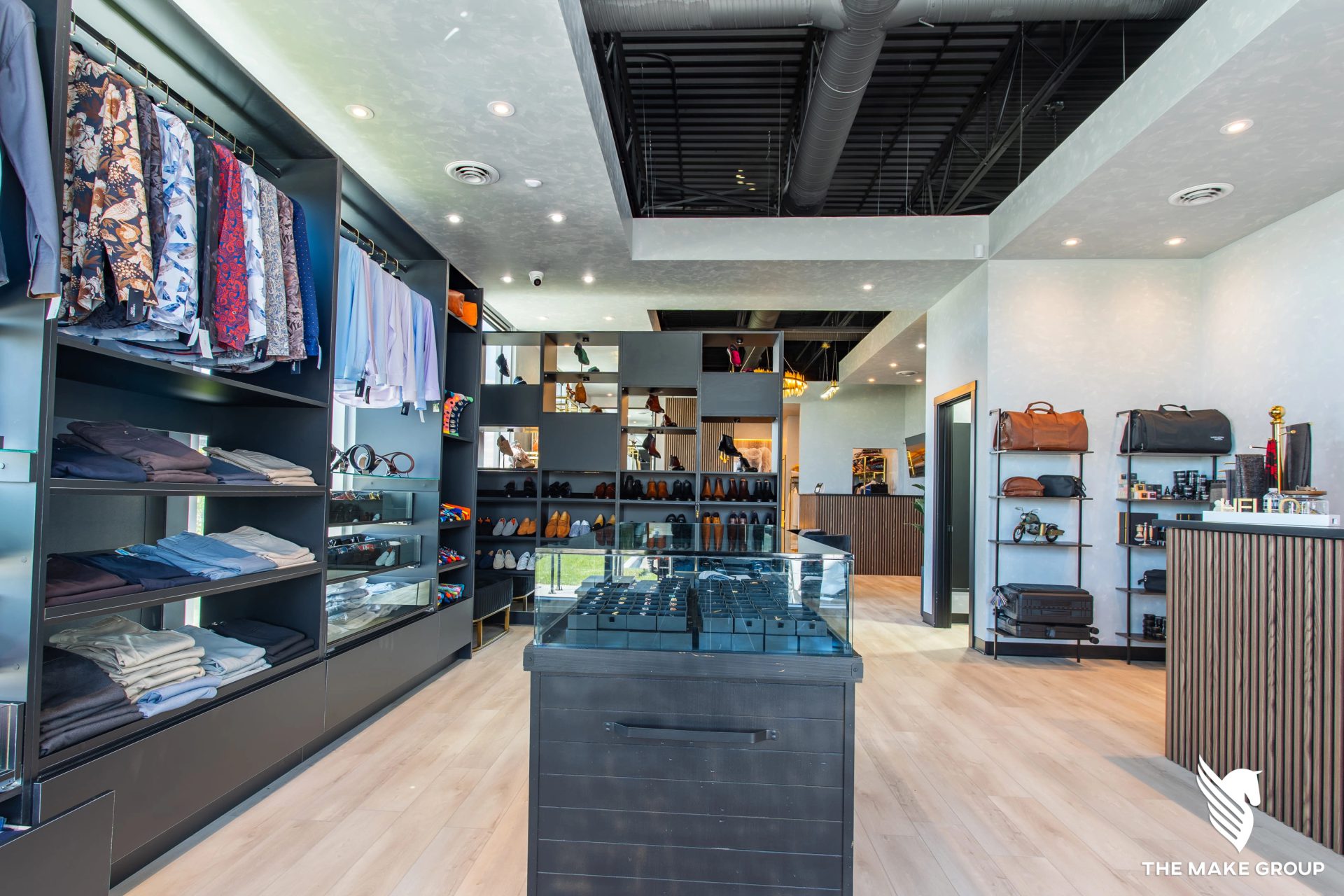
When searching for commercial construction companies in Calgary, most business owners and developers quickly discover the same problem: there are dozens of firms claiming to handle commercial builds, but very few have the systems, sector experience, and project management discipline to deliver a complex build on time and on budget.
Calgary's construction market is active and competitive. Whether you are opening a medical clinic, building out a franchise restaurant, developing an industrial facility, or completing a ground-up commercial project, the firm you choose will shape every aspect of your outcome — from permitting to final handover.
This guide walks you through the exact criteria to use when evaluating and comparing commercial construction firms in Calgary, so you can make a confident, well-informed decision before signing a contract.
1. Start With Sector-Specific Experience
Not all commercial construction companies in Calgary build across the same sectors. Commercial construction is a broad category that includes healthcare, hospitality, retail, industrial, childcare, office, and ground-up development — each with its own regulatory requirements, material specifications, and construction logic.
Before shortlisting any firm, confirm they have completed verified projects in your specific build type:
Medical and dental clinics — requires knowledge of AHS compliance, infection control layouts, medical gas systems, and healthcare ventilation standards
Restaurants and food service — demands experience with Type I/II commercial kitchen hoods, grease interceptors, and municipal health code requirements
Childcare facilities — governed by Alberta Children's Services licensing standards including outdoor area ratios, acoustic insulation, and egress requirements
Industrial construction — involves structural loading, large-format mechanical systems, and floor flatness tolerances not found in typical commercial builds
Retail and franchise fit-outs — requires experience with branded fixture installation, storefront systems, and franchisor drawing packages
Ask every contractor to show you completed projects in your category — not just photos, but project details: square footage, scope, timeline, and client references you can actually call.
2. Evaluate Project Management Systems
The difference between a smooth commercial build and a chaotic one almost always comes down to project management. When comparing firms, look for evidence of structured, documented systems — not just confident sales conversations.
What a Well-Managed Contractor Looks Like
Ask each firm to walk you through their process from pre-construction to handover. A disciplined contractor should be able to show you:
A detailed pre-construction scoping process — do they invest time understanding your operational requirements before pricing?
A written project schedule broken down by phase — milestones, permit timelines, trade sequences
A formal change order process — how are scope changes documented, priced, and approved before work proceeds?
A defined subcontractor roster — do they work with consistent, vetted trade partners or hire ad hoc?
A structured reporting cadence — weekly updates, site photos, issue logs
A post-construction deficiency process — how are punch list items tracked and closed after substantial completion?
Firms that manage by feel rather than process will tell you everything is handled informally. That works on small residential jobs. It does not work on commercial projects where a two-week permit delay or an uncoordinated trade sequence can cost tens of thousands of dollars.
3. Verify Credentials, Insurance, and Compliance
In Alberta, commercial construction is a regulated activity. Any firm you consider must carry the proper credentials — and should be able to produce documentation without delay.
Confirm the following before proceeding:
Valid City of Calgary business licence
Active Workers' Compensation Board (WCB) coverage — mandatory in Alberta
Commercial general liability insurance, minimum $2M per occurrence for most commercial projects
Membership in the Calgary Construction Association (CCA) or Alberta Construction Association (ACA)
Familiarity with Alberta Building Code, STANDATA bulletins, and City of Calgary Development and Building Approvals (DBA) process
A contractor who hesitates to provide any of these documents is communicating something important about how they operate. Move on.
4. Assess Permit Management and Regulatory Knowledge
One of the most overlooked differentiators among commercial construction companies in Calgary is permit and regulatory management. Calgary's Development and Building Approvals process is layered — and specialty project types add further complexity through AHS, AGLC, Alberta Children's Services, or National Energy Code compliance requirements.
When evaluating contractors, ask specifically:
Who manages permit submissions — the contractor directly, or is it delegated to the client?
What is their typical permit turnaround timeline with The City of Calgary for your project type?
Have they coordinated AHS inspections for healthcare builds? AGLC approvals for licensed restaurants?
Can they manage engineer and architect coordination without requiring the client to act as intermediary?
A contractor who handles the permit process with confidence and specificity has done this before. One who gives vague answers or defers permit responsibility to the client is likely inexperienced in commercial work — or in your specific build type.
5. Scrutinize Pricing Transparency
Pricing is where many commercial construction relationships break down. An initial low bid that is padded with change orders throughout the project will always cost more than a higher, well-scoped proposal upfront.
What Transparent Pricing Looks Like
When comparing proposals from commercial construction firms, look for:
Detailed line-item breakdowns — not lump-sum totals with minimal description
Clearly stated exclusions — what is not included in the scope?
Defined allowances — where approximate costs are used, how are overages handled?
Payment milestones tied to construction progress — not front-loaded to favour the contractor's cash flow
Holdback provisions consistent with the Alberta Builders' Lien Act
If two proposals are significantly different in price, the question is not "which is cheaper" — it is "what does each actually include?" Make contractors defend their numbers at the scope level, not the total level.
6. Check References the Right Way
References from past clients are one of the most reliable sources of insight available — but only if you ask the right questions. Generic references are not useful. Structured reference checks are.
For every reference you contact, ask:
Did the project finish within 10% of the original contracted budget?
Were major delays experienced, and how were they communicated?
How accessible and responsive was the project manager throughout the build?
Were there unresolved deficiencies after handover?
Would you hire this contractor again for a similar project — and have you?
Ideally, at least one reference should be for a project similar in type and scale to yours. A contractor who has delivered 20 excellent restaurant fit-outs is not necessarily the right choice for a 15,000 sq ft ground-up medical complex.
7. Evaluate Communication Before You Sign Anything
The way a contractor communicates during the sales process is a direct preview of how they will communicate during construction. The best commercial construction companies in Calgary treat communication as a professional responsibility — structured, proactive, and documented.
Before committing, observe:
Response time — are emails and calls returned promptly and professionally?
Proposal quality — is the written proposal specific, well-organized, and free of vague language?
Proactive issue-raising — do they flag potential complications during the pre-construction process, or only after problems emerge?
Clarity on scope — can they explain exactly what they will and will not be responsible for?
Dedicated point of contact — will you have one consistent project manager throughout the build?
Contractors who communicate poorly before the contract is signed will communicate worse once they have it.
About The Make Group
The Make Group is a Calgary-based commercial general contractor serving clients across Alberta and Ontario. Since 2015, we have delivered over 107 completed projects across healthcare, restaurant, retail, childcare, industrial, and ground-up construction — totalling more than 500,000 square feet of developed space and $40M in total project value.
Our process is built on disciplined pre-construction planning, transparent pricing, dedicated project management, and clear communication from scope to handover. We are members of the Calgary Construction Association and maintain full WCB coverage and commercial general liability insurance on all active projects.
If you are evaluating commercial construction firms for an upcoming project in Calgary or Alberta, we welcome the opportunity to show you how we work — in detail.
Frequently Asked Questions
Q1: How do I compare quotes from different commercial construction companies in Calgary?
Compare quotes at the line-item level, not the total. Request itemized breakdowns from every contractor, identify what each proposal includes and excludes, and ask each firm to explain their allowances and contingencies. A lower total number with vague inclusions is almost always a higher actual cost. Focus on scope clarity and pricing logic, not headline figures.
Q2: How long does a typical commercial construction project take in Calgary?
Timelines vary by project type and complexity. A standard commercial tenant improvement in the 1,000–3,000 sq ft range typically runs 8–16 weeks from permit issuance. Larger ground-up developments range from 6 months to 18+ months. Permit timelines with The City of Calgary add additional lead time before construction begins — typically 4–12 weeks depending on project type and completeness of submission documents.
Q3: What questions should I ask before hiring a commercial contractor in Calgary?
Key questions include: Have you completed projects in my specific build type? Can you show me a sample project schedule and change order form? Who manages permit submissions? What does your subcontractor roster look like? How do you handle changes to scope mid-project? Can I speak with three references from similar projects? A contractor who answers these questions confidently and specifically is demonstrating real operational depth.
Q4: What are the most common mistakes business owners make when hiring a commercial contractor?
The most common mistakes are: choosing based on the lowest bid without comparing scopes, not verifying sector-specific experience, skipping reference checks or only asking generic questions, failing to confirm WCB and insurance coverage, and not reviewing the change order process before signing. Each of these mistakes is easily avoided with structured due diligence — and each one is frequently responsible for significant cost overruns and project delays.
Q5: Is it important to hire a Calgary-based contractor rather than an out-of-province firm?
For most commercial projects in Calgary, yes. A locally based contractor will have established relationships with City of Calgary permit reviewers, Alberta-based engineers and architects, and local trade subcontractors. They will also understand regional material costs, labour availability, and code interpretations specific to Alberta. An out-of-province firm can operate in Alberta, but should demonstrate specific Calgary project experience before being considered for local work.
Q6: How do I know if a commercial construction company is financially stable?
Ask for a list of their active subcontractors and suppliers. Inquire whether they can provide a performance bond for your project — bondability is a direct indicator of financial credibility assessed by a third-party bonding company. Review their payment structure to ensure milestones align with construction progress rather than being heavily front-loaded. You can also request a reference from a current subtrade who can speak to whether the contractor pays on time.
Start Your Commercial Project in Calgary
Ready to move forward with your commercial build? Contact our team to discuss your project scope, review our portfolio, and receive a detailed, transparent proposal.